Search for the heartomenal house guide from homehearted and you will find pages that disagree about what it is. One treats it as a decor guide. Another describes a home value report. A third is a plain house-buying checklist. Almost none of them gives a dollar figure, a time estimate, or a source.
This post fills that gap. It explains what the term actually refers to, then gives you a usable guide for buying, improving, and maintaining a home in the United States. Costs are typical ranges. Local prices vary, so get quotes before you commit money.
What the Term Actually Refers To
Before you follow any heartomenal house guide from homehearted, it helps to know what kind of page you are reading. I could not find an official publisher, named author, or documented methodology behind the name, so treat all claims tied to it with some caution. leading 5 3d printing mexico homehearted
Four Ways the Term Shows Up Online
| Version you will see | What it covers | What it usually leaves out |
|---|---|---|
| Home tips blog post | Furniture flow, storage, compact kitchens, patios | Costs, steps, photos |
| Value-report style page | Local demand, rental listings, quarterly updates | Data sources, sample reports |
| House-buying walkthrough | Location, budget, preapproval, offers | US closing costs, inspections, state rules |
| Organization hacks page | Decluttering, labels, vertical storage | Room plans, budgets, products |
What Can and Cannot Be Verified
- Can be verified: the underlying advice on budgeting, inspections, maintenance, and storage, because it matches standard guidance from lenders, inspectors, and agencies like ENERGY STAR.
- Cannot be verified: any score, report, or proprietary data tied to the name. If a page says it updates quarterly or measures demand, ask for the source.
The rest of this guide sticks to advice you can check yourself.
Quick-Start Checklist
The short version of this heartomenal house guide from homehearted, built for people who want action before reading everything:
- Write down your goal: buy, renovate, organize, or maintain.
- Set a budget with a 10 to 15 percent buffer for surprises.
- Walk every room with a notebook and list what annoys you daily.
- Fix safety and water problems first, then comfort, then looks.
- Schedule recurring maintenance on your phone calendar.
- Only then spend on upgrades.
Order matters. A new backsplash looks bad above a leaking sink.
Buying a Home in the US
If you are buying, the heartomenal house guide from homehearted starts with money, not listings.
Budget and Down Payment
Lenders look at income, debts, credit score, and savings. A common check is whether total monthly housing cost fits comfortably inside your income, and many people aim for under about 28 percent. That is a rule of thumb, not a requirement.

| Loan type | Typical minimum down payment | Who it suits |
|---|---|---|
| Conventional | As low as 3 percent, 20 percent avoids mortgage insurance | Buyers with solid credit |
| FHA | 3.5 percent with a qualifying credit score | Lower savings or credit |
| VA | Often 0 percent | Eligible veterans and service members |
| USDA | Often 0 percent | Eligible rural and suburban areas |
Closing costs usually run about 2 to 5 percent of the purchase price. On a $350,000 home that is roughly $7,000 to $17,500 on top of your down payment.
Get Preapproved First
Preapproval means a lender has reviewed your documents and stated how much it may lend. It tells sellers you are serious and keeps you from falling for homes outside your range. Gather two years of tax returns, recent pay stubs, bank statements, and ID before you apply.
Inspection Red Flags
A general inspection often costs a few hundred dollars. It is the cheapest protection in the whole process. Watch for:
- Water stains on ceilings, around windows, or at the base of walls
- Cracks wider than a quarter inch, or doors that stick across a whole floor
- Old electrical panels, ungrounded outlets, or scorched switch plates
- A roof near the end of its life (ask its age)
- A musty basement smell or efflorescence (white mineral deposits) on concrete
- Slow drains and low water pressure
Ask about add-ons based on location: radon testing, a sewer line camera scope, termite inspection, or a wildfire or flood risk review.
Offers, Contingencies, and Closing
Your agent will help you write an offer with contingencies, which are conditions that let you exit or renegotiate. The most common are inspection, financing, and appraisal. Waiving them can win a bidding war but shifts risk to you. Think hard before doing that.
Room-by-Room Upgrades
Every room entry in this heartomenal house guide from homehearted has a cost range, a time estimate, and a difficulty rating. Treat the numbers as ballparks.
| Room | Upgrade | Typical cost | Time | Difficulty |
|---|---|---|---|---|
| Kitchen | Paint cabinets and swap hardware | $500 to $3,000 | 2 to 5 days | Moderate |
| Kitchen | Pull-out organizers and drawer dividers | $100 to $500 | 1 day | Easy |
| Bathroom | Regrout, new faucet, new light fixture | $300 to $1,500 | 1 to 2 days | Moderate |
| Bathroom | Vanity swap | $500 to $2,500 | 1 to 2 days | Moderate to hard |
| Living room | Paint plus layered lighting | $400 to $1,500 | 2 to 3 days | Easy to moderate |
| Bedroom | Closet system | $150 to $1,200 | 1 day | Easy |
| Outdoor | Patio or balcony refresh | $500 to $3,000 | 1 to 3 days | Easy to moderate |
Kitchen
Compact kitchens fail because of storage and counter clutter, not style. Start with a cleanout: anything unused in a year goes. Then add vertical storage, a rail for utensils, and under-shelf baskets. Only after that consider new cabinet fronts.
Bathroom
Water is the enemy. Fix failing caulk and grout before any cosmetic work. Add an exhaust fan sized for the room if there is none, since moisture control prevents mold, which costs far more to fix later.
Living Areas
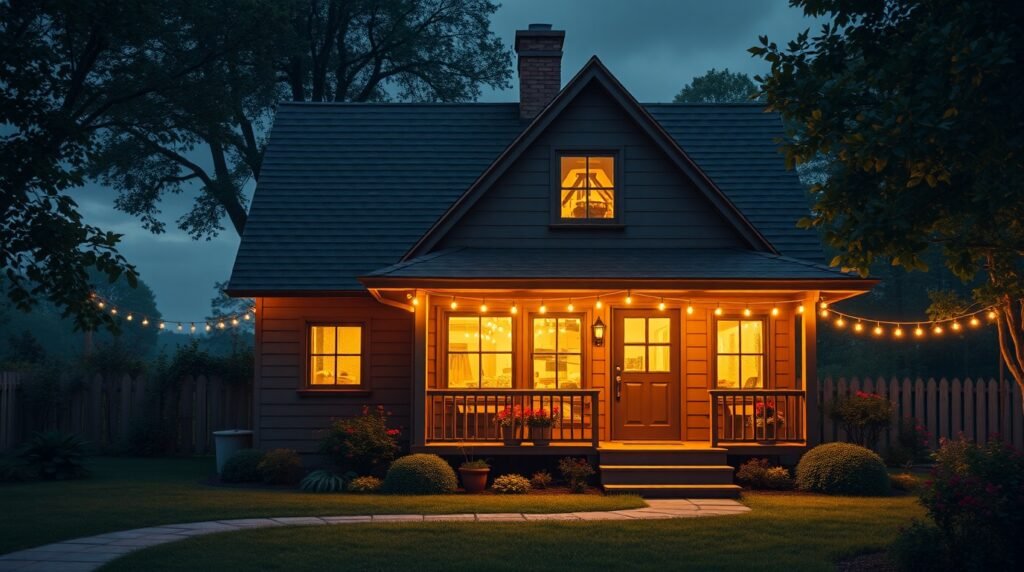
Rearrange before you buy. Pull furniture off the walls, leave about three feet for walkways, and place seating so people face each other. Use three light sources per room: overhead, task, and accent. Warm bulbs (around 2700K) make rooms feel cozy.
Outdoor Spaces
Small patios and balconies work with a rug, weatherproof seating, planters, and string lights. Choose materials rated for your climate. Cheap cushions rot fast in humid regions.
Storage and Organization That Last
Storage ideas in the heartomenal house guide from homehearted repeat a few themes: use vertical space, label everything, and apply a one-in, one-out rule. Here is how to make them work.
| Space | Problem | Fix |
|---|---|---|
| Under the bed | Wasted volume | Low rolling bins for off-season clothes |
| Behind doors | Unused surface | Over-door racks for shoes, cleaning supplies |
| Above cabinets | Dust trap | Baskets for rarely used items, labeled |
| Entryway | Piles of bags and shoes | Hooks at adult and kid height, a bench with bins |
| Garage | Everything on the floor | Wall tracks and ceiling racks |
A Four-Step Declutter Method
- Empty: take everything out of one zone.
- Sort: keep, donate, trash, relocate.
- Group: put like items together.
- Contain: buy bins only after you know the volume you need.
Buying containers first is the most common organizing mistake. You end up storing clutter more neatly.
Maintenance Calendar by Season
Maintenance is where the heartomenal house guide from homehearted saves the most money, because small checks catch expensive problems early. A common rule of thumb is to budget about 1 percent of your home’s value per year for upkeep. Older homes need more.
| Season | Tasks |
|---|---|
| Monthly | Check HVAC filter (replace every 1 to 3 months), test smoke and carbon monoxide alarms, look under sinks for leaks |
| Spring | Clean gutters, inspect roof from the ground, service the air conditioner, check exterior caulk |
| Summer | Clean dryer vent, inspect deck and fence, trim plants away from siding |
| Fall | Clean gutters again, service the furnace, seal drafts, shut off outdoor hose faucets before freezing weather |
| Winter | Check attic for leaks or ice dams, know where your main water shutoff is, watch for pipe freeze risk |
| Yearly | Flush water heater, test GFCI outlets, review insurance coverage |
Adjust for Your Region
- Northeast and Midwest: freeze protection, ice dams, gutter care.
- Southeast and Gulf Coast: humidity, mold, termites, storm prep.
- Southwest: heat damage to roofs and stucco, irrigation leaks.
- Pacific Northwest: moss on roofs, moisture in crawlspaces.
- California and the West: defensible space for wildfire, water heater strapping for earthquakes.
Energy Savings Worth Doing
Air sealing and adding insulation are among the most cost-effective upgrades. The EPA’s ENERGY STAR program estimates homeowners can save around 15 percent on heating and cooling costs by sealing and insulating. Start with weatherstripping doors and caulking window gaps, which costs little.
Which Upgrades Actually Pay Off
No heartomenal house guide from homehearted is complete without return on investment, because spending without a plan is how people lose money. Remodeling magazine’s annual Cost vs. Value report compares what projects cost against how much value they add at resale. In recent years, exterior replacement projects such as garage doors and entry doors have tended to recoup a high share of their cost, while large kitchen remodels often recoup much less than smaller refreshes. Check the latest edition for your region, since results shift each year.
Use this filter before you spend:
- Will you live there for years? If yes, spend on comfort you will use.
- Will you sell within three years? Stick to paint, lighting, curb appeal, and repairs.
- Is it a repair or a taste upgrade? Repairs protect value. Taste upgrades may not return.
Budget Tiers
| Budget | Best uses |
|---|---|
| Under $500 | Paint one room, new hardware, organizers, weatherstripping, better bulbs |
| $500 to $5,000 | Cabinet painting, closet systems, patio refresh, faucet and fixture swaps |
| Over $5,000 | Roof repairs, windows, HVAC, bathroom remodel, kitchen refresh |
Always put safety, water, electrical, and structural items ahead of cosmetics, whatever your tier.
A 30-Day Plan to Put This Into Practice

Here is how to run the heartomenal house guide from homehearted over one month:
- Week 1: Walk every room, list problems, photograph them, and rank by safety, cost, and annoyance.
- Week 2: Fix the top safety and water issues. Test alarms and check under sinks.
- Week 3: Declutter two zones using the four-step method, then buy only the containers you need.
- Week 4: Pick one visible upgrade, such as paint and lighting in the room you use most, and put maintenance reminders in your calendar.
At the end of the month you have a safer house, less clutter, and a plan. That beats a renovation started with no list.
Frequently Asked Questions
What is the heartomenal house guide from homehearted?
It is a loosely used name for home advice online, covering buying, decor, and organization. No official publisher or method is documented, so judge any page by its sources.
Is Heartomenal a real estate valuation tool?
Some pages describe it that way, but I found no verifiable data or methodology. For value estimates, use an agent’s comparative market analysis or an appraisal.
How much should I budget for maintenance each year?
A common rule of thumb is about 1 percent of the home’s value. Older homes and extreme climates may need more.
What should I fix first in a new home?
Start with safety and water: smoke and carbon monoxide alarms, leaks, electrical hazards, and roof or gutter problems. Cosmetic updates come after.
Are closing costs included in the down payment?
No. Closing costs are separate and usually run about 2 to 5 percent of the purchase price.
Which home upgrades give the best return?
Exterior replacements like garage and entry doors often rank high, while big kitchen remodels often return less. Check the current Cost vs. Value report for your region.
Can I follow this on a small budget?
Yes. Organizing, painting, lighting, and weatherstripping cost little and change how a home feels and performs.
Final Thoughts
The name is vague, but the useful parts are not. Know your budget, inspect before you buy, fix water and safety first, organize before you spend, and keep a maintenance calendar. Use the heartomenal house guide from homehearted as a starting point for those habits, then check each claim against a source you trust. Good home decisions come from numbers, inspections, and routine, not from a catchy name.